

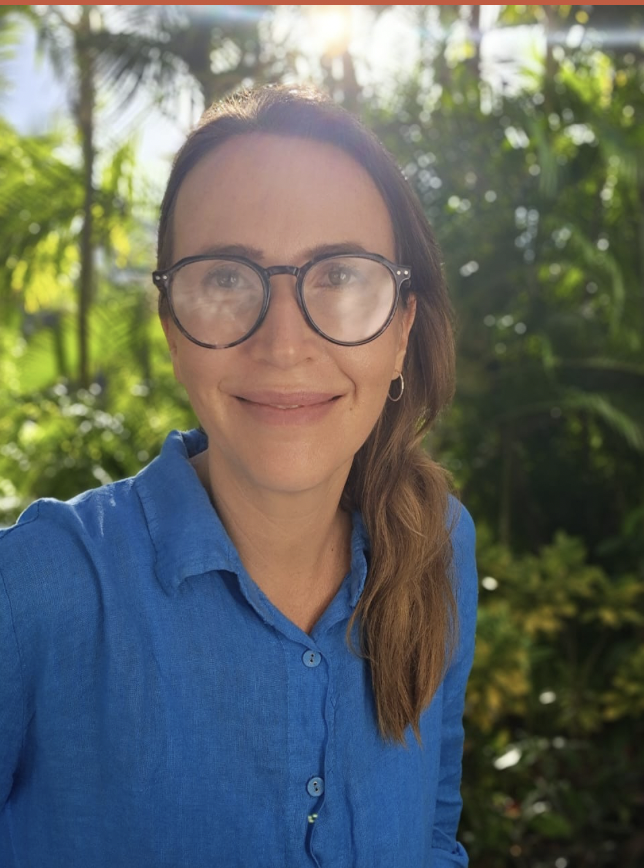
Bridging Islands, Backing Visionaries – Five questions with Katharina Ehrmann
What are your ties to the Caribbean and how do you feel connected to Caribbean art and culture?
My ties to the Caribbean are rooted primarily in Haiti. The larger island of Ayiti-Quisqueya has been my chosen home for 20 years. Because of my father’s profession in international development, I grew up in different African countries and in the first five years of post-Duvalier Haiti. Life took me back to Port-au-Prince in 2009, almost exactly one year before the 2010 earthquake. The earthquake, multiple other crises and – above all – the struggles, strength and courage of the Haitian people have profoundly shaped me. Today my personal ties to Haiti are rooted in my family, and this connection continues to inform and deepen my commitment to the region.
I moved to the other side of the island in 2020, but my day-to-day life and personal engagement is still very much marked by what is happening in Haiti and to Haitians and Dominicans of Haitian descent in the Dominican Republic. The many struggles for justice and self-determination are also powerfully expressed through arts and culture. I’ve seen how engaging in and with artistic creation—despite everything else that’s happening—can be deeply transformative. It offers a way to connect with something greater, to find renewal, and to create space where it feels like none exists. Haitian—and Caribbean—art reminds me of the beauty and strength of the human spirit. It carries joy, truth, and aliveness.
What makes you passionate about working with these artists?
I’ve worked in development and humanitarian fields throughout my career, motivated by the belief that I could make a meaningful difference in people’s lives. It took me time to understand the limitations of this work and comprehend my own need to engage with the world in more creative ways. As Grants Manager at CCF, I’m able to draw on my previous experience while engaging with creative, purpose-driven work. I work with amazing human beings who not only have bold ideas but also the courage and determination to bring them to life. This inspires me very much. I am also very passionate about the perspectives and narratives that the projects and creations hold and carry into the world. I’m grateful to contribute my bit of know-how to support a broader cultural shift.
How do you handle such a wide cross section of grantees, covering different countries and art forms?
As the Grants Manager I am the main contact person for the applicants and grantees. Given the diversity of people, contexts, art forms, and projects, my main role is to listen attentively, capture challenges, and help find solutions. I am fluent in four major Caribbean languages (Haitian Creole, Spanish, English and French) and I think this really helps to create trust and have open, fluid conversations. I try to provide a structure that can both guide and flexibly adapt to each project. In terms of the wider context, we are working to support creatives in more ways, whether by supporting their applications to other funding, building referral systems, or improving coordination among funders.
What would you say is the most memorable part of being the Grants Manager of the CCF so far?
Without a doubt, it’s been the strong collaboration with Kellie and Krys. From the very first day, I felt trusted and valued in our small but committed team of three. Our shared dedication, mutual support, and openness to learning from one another have been essential to navigating both the challenges and the joys of this work.
What are you most looking forward to in the CCF’s upcoming plans?
As the CCF prepares to launch at least two grant cycles per year and expand support across the Caribbean and its diaspora, it continues to place creative expression and collaboration at the heart of its mission. I’m looking forward to deepening my connection to the greater Caribbean region — learning more about the different islands, their (hi)stories, and getting to know their cultural practitioners. I hope to help build more bridges across geographic, linguistic, and other barriers. It feels meaningful to support projects that foster shared learning and solidarity across the region, especially as we navigate a world shaped by fragmentation, colonial legacies, and shifting global priorities. At the same time, I’m eager to continue fine-tuning the grant cycle processes — creating clearer systems, guidelines, and templates that allow the work to flow more smoothly and autonomously. And on a personal note, I hope the creativity, vision and determination of the communities we work with will nurture my own creative practices along the way.